
Home > Blog > Moving to Spain > Moving to Valencia, Spain: What We Learned From Actually Doing It
MOVING TO SPAIN
SEP 20, 2026
Moving to Valencia, Spain: What We Learned From Actually Doing It
moving to spain
In May 2026, we moved from Texas to Valencia, Spain, with two dogs, two cats, a handful of suitcases, and no real experience living in Spain.
We were navigating Spain’s Digital Nomad Visa process, keeping a U.S.-based remote job, and trying to find housing that would accept four pets—all in a city we had chosen mostly through research rather than firsthand experience.
A few months later, we’re settled into a long-term apartment. We’ve gone from owning two cars to not needing one. Robin has continued working for his U.S. employer, Sienna is taking Spanish classes, and Valencia is starting to feel less like somewhere we moved and more like where we live.
The move has worked out well for us.
But there are definitely things we would do differently.
This is the guide we wish we’d had before moving to Valencia: why we chose the city, how we made the move, what it cost, what went wrong, and what we’ve learned since arriving.
In This Guide
If you’re thinking about moving to Valencia, here’s what we’ll cover based on our own experience:
- Why we chose Valencia
- Our timeline and immigration process
- What we brought and moving four pets
- Finding an apartment in Valencia
- What moving to Valencia cost us
- Settling into everyday life
- What was easier, harder, and what we got wrong
- Whether we’d move to Valencia again
Why We Chose Valencia
Our decision to move to Valencia actually started before Valencia was part of the conversation.
We had been thinking about buying a home, which forced us to ask a bigger question:
Where did we actually want to put down roots?
We were doing well in Dallas, but the city was getting more expensive. Because Robin worked remotely, we also weren’t particularly dependent on the strong local job market that is one of Dallas’s biggest advantages.
We wanted more walkability, better access to nature, good weather, food, culture, and a stronger sense of place.
At first, we considered other U.S. cities. San Antonio was an option, and Florida became the more serious possibility. For a while, we were basically planning to move to Orlando.
Then we asked ourselves:
What happens if we stop limiting the search to the United States?
Instead of starting with a city, we started with the kind of everyday life we wanted.
The things that mattered most to us were:
- Warm, sunny weather
- Walkability
- Beaches and access to nature
- Good food
- History and culture
- Reasonable value
- A Spanish-speaking environment
- Easy travel
- Proximity to family in Europe
- A realistic immigration route
- A city with energy that didn’t feel enormous
We considered places in Portugal, Latin America, California, and Sardinia, where Robin has family.
Eventually, Spain emerged as one of the strongest options—and Valencia kept checking boxes.
It had a Mediterranean climate, beaches, the Turia Gardens, a walkable center, Spanish, good connections to the rest of Europe, and a city size that appealed to us.
We had barely been to Valencia
The unusual part is that we didn’t choose Valencia because we’d spent years vacationing here.
Sienna had never been to Europe.
Robin had technically visited Valencia during a multi-country trip roughly 13 years earlier, but the stop was so brief that he remembered almost nothing about it.
For practical purposes, we chose Valencia from scratch.
We researched the city, compared it against what we wanted, and decided we’d rather try it before buying a home and anchoring ourselves somewhere else.
If it didn’t work, we could leave.
That made the decision much easier.
How Long Did It Take Us to Move to Valencia?
From serious idea to physically moving, our timeline was roughly five months.
We began seriously considering an international move around December 2025. By January or February, Valencia had become the plan.
From there, things moved quickly:
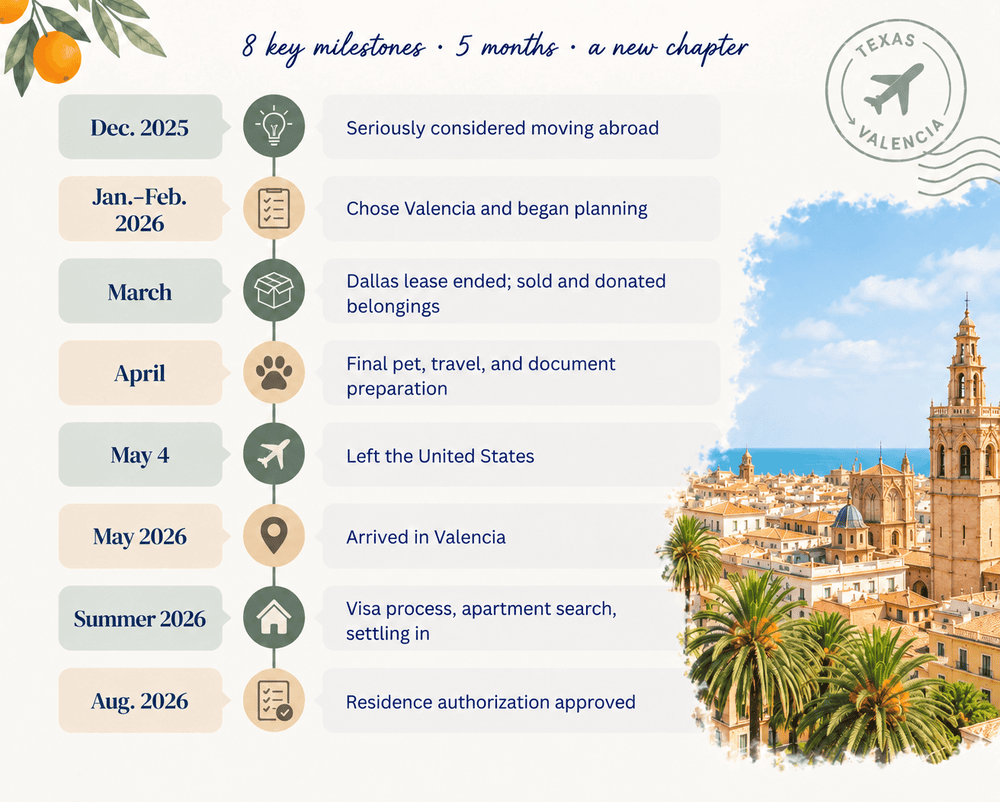
Five months was possible. If we did it again, we’d give ourselves more time.
Not because of packing. Because of paperwork.
Our Digital Nomad Visa Experience
Before worrying about neighborhoods or apartments, the most important question is much less exciting:
How can you legally live in Spain?
For us, the answer was Spain’s Digital Nomad Visa/international teleworker route.
Robin already worked remotely for a U.S. company, and his employer allowed him to work from Spain. Sienna applied as his partner.
Our application involved employment and financial documentation, background checks, professional qualifications, health insurance, Social Security documentation, and evidence related to our relationship.
Some documents needed apostilles or other certification. Others needed Spanish sworn translations.
That’s where things became more complicated than we’d expected.
Our biggest visa mistake
We initially planned to handle the process ourselves.
Most of it seemed manageable.
The difficult part was knowing whether every individual document met the exact requirement: which certifications were necessary, what type of translation was accepted, how certain employer documents should be written, and what applied to our specific situation.
After arriving in Valencia, we hired an immigration lawyer.
By then, we’d already paid for some things that had to be redone. Other documents had to be sent back to the United States for additional processing.
Nothing derailed our move, but it added time, expense, and stress.
If we did it again, we’d either:
- Hire professional help earlier, or
- Commit fully to doing it ourselves after confirming every requirement.
Our middle-ground approach created duplicated work.
We’d also complete as much U.S. paperwork as possible before leaving the United States.
What We Brought—and What We Didn't
We decided not to ship our household belongings internationally.
Instead, we sold or donated most of our furniture, TVs, kitchenware, and other bulky belongings and moved with roughly six suitcases.
Because we planned to rent furnished apartments, paying thousands of dollars to move things we could replace didn’t make sense to us.
There are a few sentimental items Sienna wishes we’d brought, but overall we’d make the same decision again.
Our rule now would be simple:
If it’s easy to replace, think carefully before paying to move it across an ocean.
Moving Four Pets to Valencia
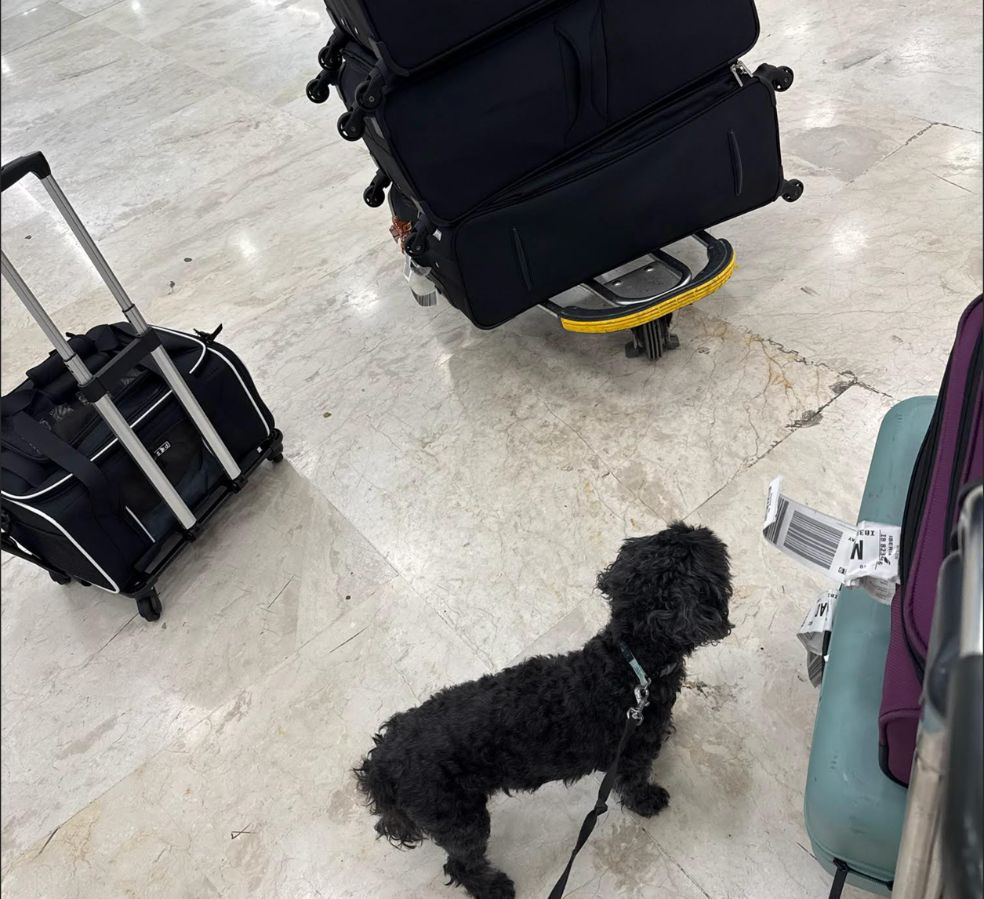
Moving two dogs and two cats was probably the most stressful part of our relocation.
All four were small enough to travel in the cabin, which was important to us. The veterinary and USDA preparation was manageable, but coordinating four animals with airline restrictions was much harder.
We ultimately flew with Iberia and needed additional family members traveling with us because of the number of in-cabin pets.
Even after calling the airline multiple times beforehand, seating restrictions created problems at check-in.
The flight itself was also stressful. One of our elderly dogs developed intermittent wheezing severe enough that we considered abandoning the flight. Thankfully, he improved substantially after we landed.
What did moving four pets cost?
We tracked most of the major expenses:
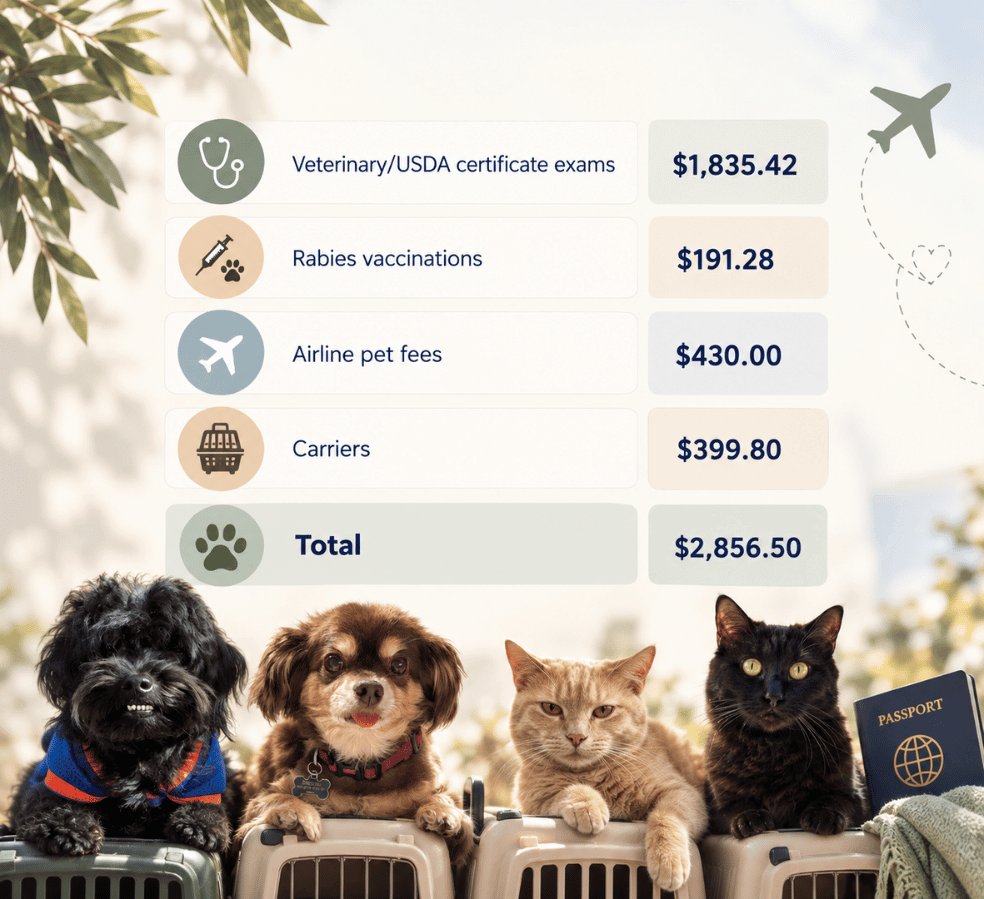
Pet-entry requirements change, so we wouldn’t recommend using our May 2026 paperwork as a current checklist.
But if you’re wondering whether moving several pets internationally is a minor side project, our answer would be no.
Treat the pets as their own relocation project.
Finding an Apartment in Valencia
We didn’t want to arrive with four pets, several suitcases, and nowhere to live.
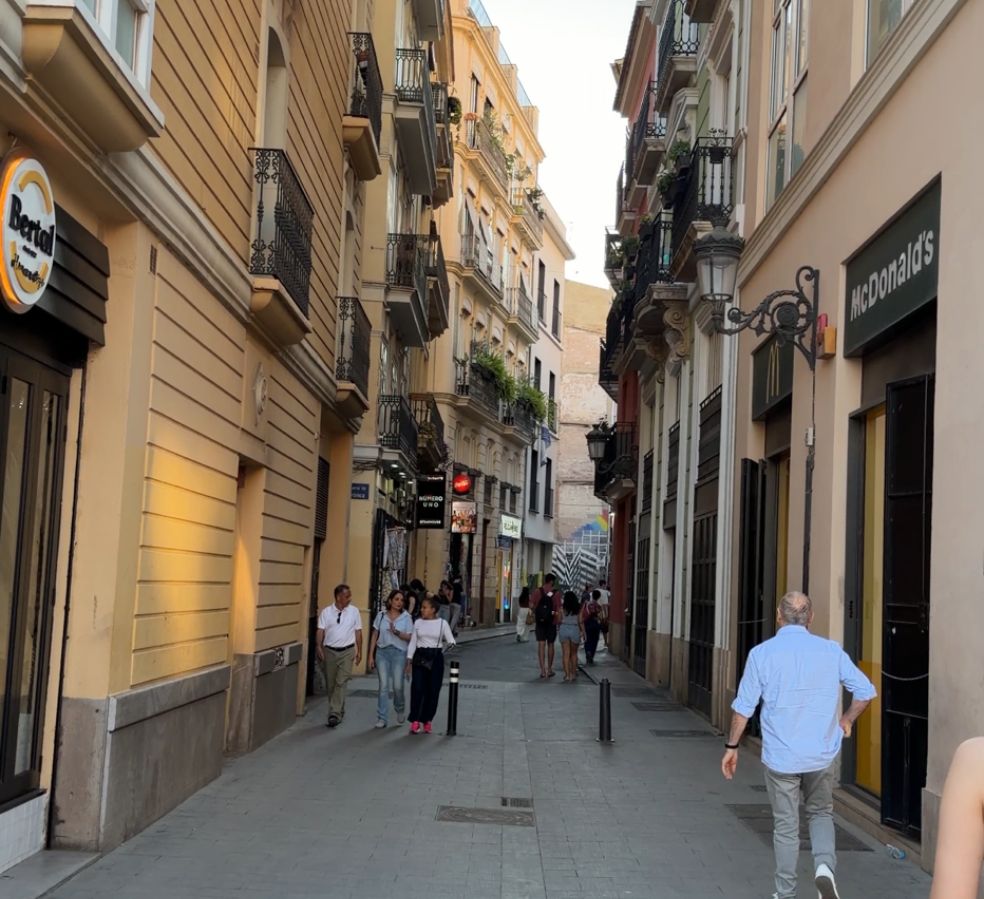
Instead of immediately signing a long lease, we found a furnished three-month rental in Pla del Remei before arriving.
That ended up being one of our better decisions.
It gave us somewhere to land while letting us experience Valencia before deciding where we wanted to stay longer term.
We liked central Valencia almost immediately and began searching for a longer lease within our first couple of months.
Four pets changed the apartment search
Our biggest housing obstacle wasn’t necessarily budget.
It was having two dogs and two cats.
Some apartments that appeared to accept pets were no longer options once landlords learned that “pets” meant four animals.
We eventually found another furnished apartment that we really like, but our pets unquestionably reduced the available inventory.
What do we pay?
We originally hoped to stay around €2,000 per month or less.
Both apartments we’ve chosen have ended up around €2,300 per month.
So our experience isn’t that Valencia housing is unbelievably cheap.
It’s that our housing money buys us a lifestyle we prefer here.
Our current apartment has significantly more space, two terraces, natural light, and more character than our previous apartment in Dallas.
For someone moving to Valencia without knowing the city well, we’d seriously consider starting with temporary furnished housing rather than immediately committing to a long-term neighborhood.
How Much Did Moving to Valencia Cost Us?
One of our biggest lessons was that moving to Valencia and living in Valencia are two different financial questions.
Our current estimate is that the overall transition required roughly $20,000–$25,000 in spending and upfront cash, depending on what we include.
We’re still reconciling a few expenses before publishing a detailed breakdown, but major costs included:
- Immigration and legal assistance
- Translations, apostilles, and documents
- Private health insurance
- Flights and ground transportation
- $2,856.50 for moving four pets
- Temporary accommodation
- Apartment deposits and initial housing costs
- Replacing things we didn’t bring
Our move was also more complicated than many people’s.
We were two people, had four animals, used professional immigration help, and had temporary accommodation and additional transportation.
Someone moving alone with two suitcases could spend dramatically less.
So we wouldn’t tell someone:
“You need $25,000 to move to Valencia.”
Our takeaway is:
Budget for the relocation separately from your normal cost of living.
Being able to afford €X per month in Valencia doesn’t necessarily mean you have enough accessible cash for the move itself.
Settling Into Life in Valencia
This is the part that surprised us most.
Getting to Valencia was complicated.
Beginning to live here wasn’t.
Our route took us from Texas to Florida, then Miami to Madrid, followed by a drive to Valencia with four pets and all our luggage.
Once we arrived, our priorities became very ordinary:
Get into the apartment. Buy groceries. Settle the animals. Return the rental car. Sleep.
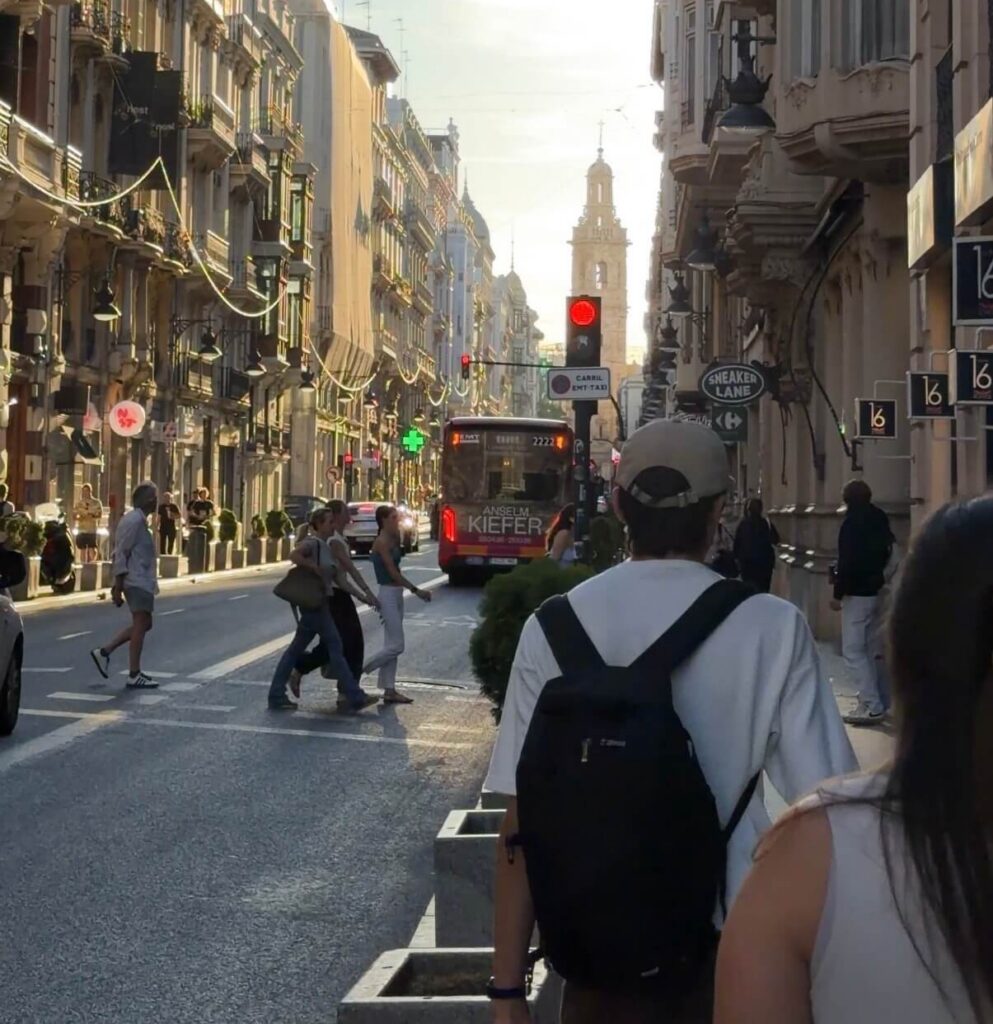
Within a relatively short period, we knew where to shop, how to get around, where we liked eating, and how our normal routines would work.
That led to one of our clearest conclusions about the move:
Moving to Valencia was complicated. Beginning to live in Valencia wasn’t.
Spanish
We also came into the move from very different starting points.
Robin is fluent in Spanish. Sienna arrived around an intermediate/B1 level and is taking classes.
You don’t need perfect Spanish to buy groceries, eat at restaurants, or handle most basic errands.
Where stronger Spanish becomes particularly useful is bureaucracy, landlords, contractors, medical situations, government websites, and complicated phone calls.
So based on our experience, you don’t need to arrive fluent.
But if you’re trying to build a life here rather than simply function here, learning Spanish is worth prioritizing.
Remote work
Robin continues working remotely for his U.S. employer, generally starting around noon and finishing between 8 and 10 p.m.
We thought the time difference might be a major drawback.
So far, it hasn’t been.
Having mornings free for appointments, exercise, tennis, errands, or just enjoying the city has actually become one of the advantages.
Going from two cars to none
This has been another major lifestyle change.
In Texas, we each owned a car.
In Valencia, we own zero.
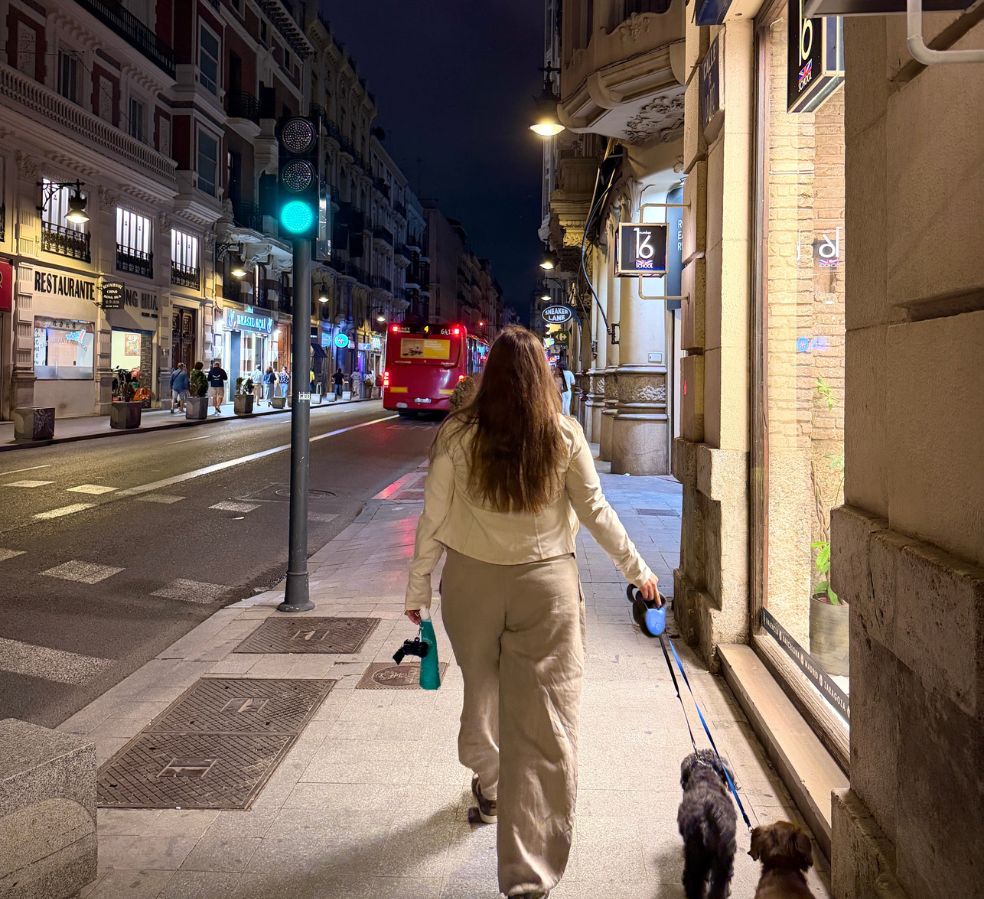
We walk or use electric scooters for much of daily life, with taxis or rideshare when necessary.
Living centrally obviously makes this easier, but we’ve been surprised by how quickly not owning a car became normal.
You don't have to solve everything immediately
We also assumed we’d have to rebuild every part of our lives as soon as we arrived.
We didn’t.
We still use our U.S. bank accounts and Wise. Robin kept his U.S. phone number. Sienna uses a European number. We have private health insurance, and both apartments already had internet.
There are still administrative steps and systems we’re figuring out.
But you don’t need to optimize your entire new life during your first week.
What Was Easier—and Harder—Than We Expected?
After a few months, some parts of the move look very different from how we imagined them beforehand.
Easier than expected
Living without a car. It became normal remarkably quickly.
Everyday errands. Living centrally makes groceries, restaurants, parks, and shopping easy.
Remote work. The U.S.–Spain time difference has been much more manageable than expected.
Establishing a routine. We felt functional in Valencia relatively quickly.
Harder than expected
Immigration details. Small documentation requirements caused more friction than the overall process.
Moving four pets. Particularly airline logistics.
Finding pet-friendly housing. Four animals reduced our options considerably.
Building community. This takes much longer than learning where the supermarket is.
That last point has probably been our most important realization:
Settled isn’t the same as integrated.
We feel settled.
We have a home and routines. We know the city much better. We’re comfortable navigating everyday life.
Building deeper friendships and community is a different process, and we’re still in it.
The 5 Biggest Mistakes We Made
If we could restart the move, these are the five things we’d change:
1. Start official paperwork earlier
Anything involving apostilles, background checks, university records, or official U.S. documents deserves extra time.
2. Decide on immigration help sooner
We’d either hire a lawyer earlier or fully commit to DIY. Switching halfway through created duplicate work.
3. Verify requirements before paying for things
Our translations were the clearest example. We paid for work that ultimately had to be redone.
4. Budget more carefully for the move itself
There wasn’t one enormous surprise. Lots of smaller expenses accumulated into a large number.
5. Understand what happens after immigration approval
Approval isn’t necessarily the end of the administrative process. We still had steps such as empadronamiento and the physical TIE process to navigate.
Would We Move to Valencia Again?
Robin’s answer right now is yes.
Valencia offers much of what he hoped we’d find: walkability, food, weather, tennis, a better home environment, proximity to family in Europe, and easier access to the rest of Spain and the continent.
Sienna’s answer is more nuanced.
She likes many aspects of Valencia, especially the walkability, parks, and lifestyle, but she’s still figuring out how easy it will be to develop deeper friendships and community.
She also liked Madrid more than either of us expected.
We think that difference is important to include.
Moving-abroad content can sometimes make the experience sound strangely absolute: either someone “escaped” their old life and everything abroad is perfect, or they regret the entire decision.
Our experience isn’t either.
We’re still early.
We haven’t even lived through a full year here yet.
But that’s also why we moved.
We didn’t need to know Valencia was our forever home.
We wanted to find out whether there might be a way of living that suited us better before committing ourselves to the place we already knew.
So far, we’re glad we tried it.
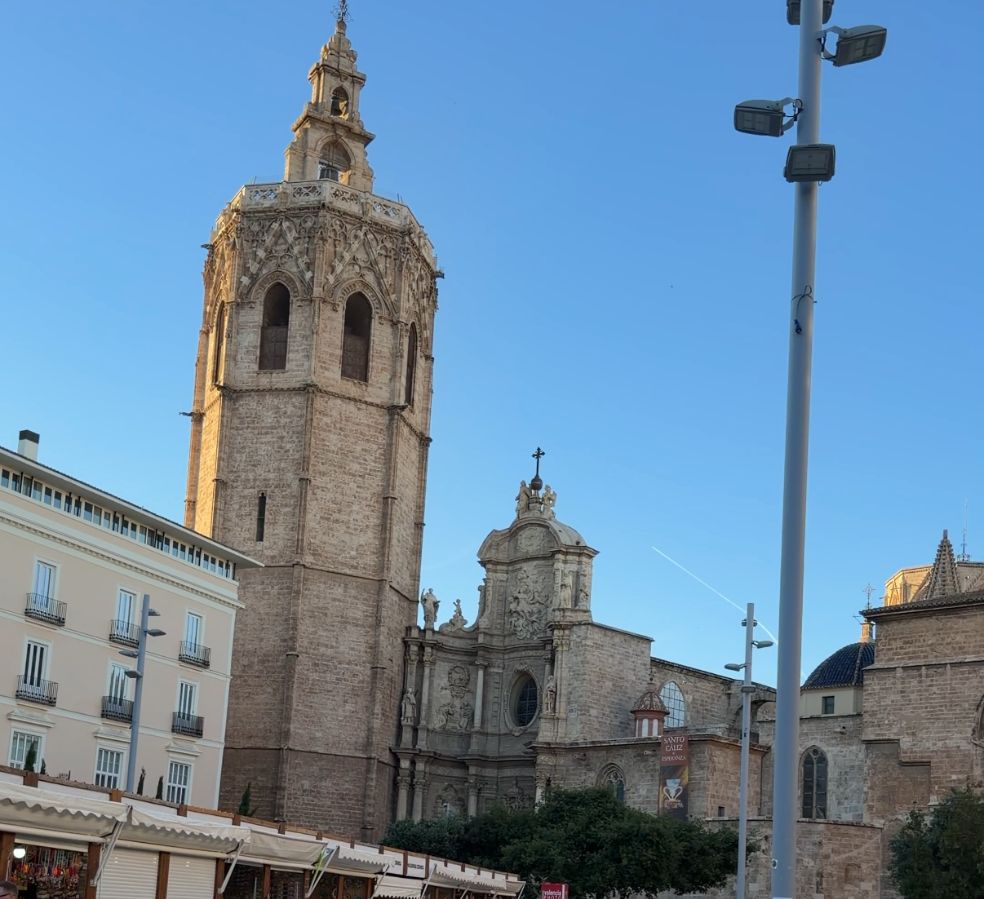
Our Advice If You're Thinking About Moving to Valencia
If we were starting the process again, we’d focus on a few things:
- Figure out your legal route first.
- Start official paperwork earlier than you think.
- Budget for relocation separately from monthly living expenses.
- Consider temporary furnished housing before signing a long lease.
- Treat moving pets as a separate project.
- Learn Spanish, even if you don’t arrive fluent.
- Don’t try to solve every part of your new life immediately.
- Give building community more time than getting settled.
Most importantly, you don’t have to know Valencia is your forever home before moving here.
We didn’t.
We decided it was worth finding out.
A few months later, we’d make that decision again.
Moving to Valencia: Frequently Asked Questions
Can Americans move to Valencia, Spain?
Yes, but Americans planning to live in Spain long term need an appropriate immigration route. Which visa or residence authorization applies depends on your circumstances.
We used Spain’s Digital Nomad/international teleworker route because Robin maintained qualifying remote employment with a U.S. company.
How much money do you need to move to Valencia?
There isn’t one universal number.
Our move involved roughly $20,000–$25,000 in spending and upfront cash, but ours was unusually complicated: two people, four pets, immigration assistance, temporary accommodation, and other relocation expenses.
A simpler move could cost substantially less.
Do you need to speak Spanish to live in Valencia?
You don’t need to arrive fluent.
Sienna has been able to handle most everyday situations at roughly an intermediate level, while Robin’s fluency has been especially useful for bureaucracy and more complicated interactions.
If you plan to make Valencia home, we’d still prioritize learning Spanish.
Do you need a car in Valencia?
We haven’t needed one while living centrally.
We went from two cars in Texas to none in Valencia and currently walk or use electric scooters for much of our daily transportation.
Your experience will depend on your neighborhood and lifestyle.
Is finding an apartment in Valencia with pets difficult?
With four pets, it was significantly harder for us.
We still found apartments we liked, but our available options were clearly reduced.
If you’re moving with animals, we’d disclose them early rather than spending time on apartments whose owners won’t accept them.
Is moving to Valencia worth it?
For us, so far, yes.
We prefer many aspects of our everyday life here, particularly the walkability, reduced dependence on cars, outdoor lifestyle, and access to the rest of Europe.
But we’re still building community and learning what long-term life here looks like.
The more useful question isn’t whether Valencia is universally “worth it.”
It’s whether the tradeoffs of living in Valencia fit the life you want to build.
About Us
Hi, we're Robin and Sienna.
We moved from Texas to Valencia to see if changing where we lived could change how well we lived.
With remote work giving us more flexibility, we wanted a life with more walkability, time outside, culture, travel, and everyday experiences—not simply a different address.
Move to Medi is where we document what that trade actually looks like.
JOIN OUR NEWSLETTER
Get new guides and real updates
Join our newsletter and follow along as we explore life in Valencia and beyond.